Shaun Levin

Archive for the ‘Writing’ Category

The Scene that Must Be Written

In Writing on March 4, 2013 at 3:16 pm

It starts like a whisper, an idea, something overheard, a faint sound, or like a need, a thing you’ve been meaning to do without first knowing it was there, and then it’s there. And you know that without it you won’t be able to go on. Not properly. You have to write it. The rest of the work depends on it. Oh, you try and skim past it, the way we ignore people who are central to our lives – a neighbour, an old friend, a family member – but we have to talk to them eventually, or forever be aware of their absence. That’s what it’s like with The Scene that Must Be Written.

There are other things you could do instead. You could wash the dishes, clean your desk, do something frivolous like check for responses to your new profile on match [dot] com, or maybe you should have set one up on Guardian Soulmates. Wouldn’t that be more your type, the intellectuals, the successful media people, that sort of thing.

But the scene will still be there tomorrow, so you might as well write it, might as well start, in fragments, in broad brushstrokes, in sketches with a tentative pencil. And there’s that moment before you start writing The Scene that Must Be Written, a scene in which you know more or less what will happen; you know who’s in it, where it takes place, and what the outcome will be. Everything is in your head and you just need to put it down on the page. That’s how it feels. Like standing at a door that is closed, your hand on the doorknob, taking a deep breath.

Often it’s a scene you weren’t planning on, a scene that has appeared because there is a gap in your novel. It’s a kind of bridge, an important moment, a thread. Sometimes it’s okay to jump for A to C, and it can be very satisfying for the audience, the reader, whomever, to imagine what that B is. But sometimes you have to write the B. In Kevin Powers’ beautiful book The Yellow Birds, he had to write the scene of what really happened to Murph, and you can see how the telling keeps getting postponed, avoided in the way painful retellings are, but then it gets told. It got written. Maybe the scene was the first thing to be written. Either way, it had to be written.

When you’re finally writing the scene the rest of the work disappears and all you want is The Scene. It builds up over time, every day. Maybe it takes a week to write, but from the moment you start writing it it begins to feel real, and suddenly you can see the bench they’re sitting on, and you know what the weather’s like, and how close they are and despite their gloves they’re holding hands because they need all the warmth they can get. It’s winter in Glasgow. On day two you can hear what they’re saying to each other. On day three you’re writing the confrontation with the drunken man, the confrontation you’ve been avoiding because you’re not sure you can do it right. Maybe you’ll get the speech wrong, maybe someone in Glasgow wouldn’t talk like that, maybe they wouldn’t respond to him like that.

There are a million ways to avoid a scene.

And only one way to make one: Write it. Risk making a fool of yourself. Write the first thing that comes to mind. Let you characters say whatever they want. It’s just a draft, it’s just you getting to know the scene. Writing a scene is improv on a stage with no audience. If there’s anything harder than improv in front of an audience, it’s improv in front of an empty theatre. That probably isn’t true, but it might be.

Write the scene and forget the rest of the work. Allow the scene to be the only thing that exists. All there is at this moment, for this hour, this week, however long it takes for The Scene that Must Be Written to be written.

Maybe what I mean is that every part of the story has to be written. Whether it stays in or not is up to us. It kind of links to Hemingway’s Iceberg Theory. Once it’s written, once you know what it is, it’ll be in the final story whether you put it in or not. Hemingway believed that sometimes “the omitted part would strengthen the story.” But you can only omit what you know. You can only omit a scene after the scene has been written. Once it’s been written, the knowledge is there in the story.
Neglect and the Novel

In Writing on March 3, 2013 at 12:02 pm

You’ve neglected your novel. For months you’ve been distracted, done other things, made excuses, promised to come back, until eventually you’re here again, at your desk. You’ve got time and no excuses. You worried that either of you may have lost interest, but neither of you have. Your novel wants to be written. You try to remember why you abandoned it in the first place. Things were going well when you started out, you’d accumulated experiences, anecdotes, scenes based mainly on things that had happened but with quite a bit of fictionalising. There was a light touch to it all, humour, and you liked that; you didn’t want heaviness, or the melancholy and death pervading the last few things you’d written, all that suicide and madness and the horrors of the First World War you’ve been writing about for the past seven years.

This was going to be a joyous novel, and you enjoyed writing it. You thought it would be like this until the end, that finally you’d write a book with a light touch to it, and humour, and something mildly interesting to say about the state of the world at this point in time. You hit 60,000 words, more than you’ve ever managed for one novel in such a short time. Then you abandoned the book.

Now, coming back to it, you see that it is very much an anecdotal book – “But I knew that already!” – and you notice that there’s something missing, that a strong thread is missing to hold it all together. A rope. The way things stand now, there’s nothing stronger to hold it together than the passing of time. Sometimes that is enough, but in the case of the novel it’s not.

You’re back in the novel. You’re turning up at your desk every morning, showing up, seeing that the book is far from finished, that it wants to go deeper, to say things you hadn’t planned on. Time and distance have given you perspective. Your novel is posing a challenge and you can choose to take it on or not. Are you prepared, willing, brave enough to follow it to the murky, complex unsettling places it wants to go to? What do you do with a novel that wants to take you somewhere, to show you something, to demonstrate that perhaps you can do something you’ve never done before.

You think of the word “lure” but that’s not the right word.

“No” is always an option. Force the novel to go somewhere else, impose an agenda, ignore what it’s saying. Walk away. It’s easy to walk away, but the more you become aware of what you’re doing, the more you see it’s a choice, it’s as simple as doing it or not doing it, as simple as turning up and sitting down. At some point you have to meet the novel head on.

You’re always abandoning things. You start something and then at some point you walk away. It’s how you operate. You have a stable of unfinished stories. Some of them want to be novels. Some of them want to go the whole way, but you’ve said stop. They call out to you: Write me. They say: We want to unravel, to unfold, we want to expose the full drama of our stories, and if you let us, you won’t have to keep carrying us around with you, we’ll stop nagging you and reminding you of all your Unfinished Business.

Maybe “neglect” is the wrong word. Maybe “abandon” is the wrong word, too. Maybe that’s how you work, and in the end you always come back. Maybe that’s a rationalisation, but at the moment you’re back and you’re writing and the novel feels good and scary and rich.

Can Writing Be a Habit?

In Writing on February 22, 2013 at 10:59 pm

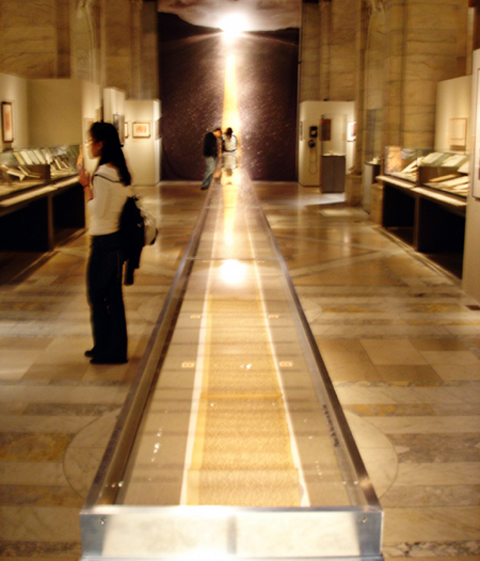
Writing is a zone. A physical zone. In the mind. When you sit down to write you enter a real space, a physical space that is invisible to anyone outside of you. What do we look like when we write? Why doesn’t someone make a movie of people writing, of what writers look like, to make a film of writers at work the way you see painters at work, or sculptors, or photographers. At the A Bigger Splash exhibition at Tate Modern, there’s a short film at the entrance of Jackson Pollock at work. There’s a long narrow painting by him that’s lying flat under glass, a bit like they displayed the scroll of Kerouac’s On the Road recently at the British Library, a bit like a dead body at the viewing. But the film. We’re talking about the film. The film of Pollock at work. When we write we enter a space that is entirely internal, the structure of our inner physicality is re-configured. That is, it is if we’re lucky, lucky to find a voice to write in, a tone, a point of view, a performance that is not the voice we use in our day-to-day, but something else, something more vital, perhaps, stranger, a voice we want to follow and see what it has to say.

For that to happen, we need the habit of writing. If we don’t access that voice every day, it gets harder to hear it. Miss a day, and it takes twice as long to really be in that voice. Miss a few days and it takes longer. No, that’s not entirely correct. It might not take longer to access the voice, but it becomes harder to stay with it, to keep it going, to allow it to be stronger than us, to carry us, to use us. We pray for a voice like that. We experiment with different points of view to tell a story until we find one that is intriguing enough, strange enough, magical enough to hold the story.

And then, once we’d found it, we must feed it. Turning up daily is how we feed it. We feed it by letting it speak through us, and in order for it to speak to us, we have to re-imagine our physicality, reshape ourselves in some way as to enable that voice to speak through us. We have to see ourselves differently to what we are in the world. Maybe that’s why writers retreat, so that we can be in that zone, uninterrupted.

Sometimes we have to get the words down before we find the voice, before we find the point of view to carry the story. Sometimes we need the entire story first. Other times it’s the voice that comes first. Like in the first line of Gogol’s short story “How Ivan Ivanovich Quarreled with Ivan Nikiforovich.” The line is: “You should see Ivan Ivanovich’s marvellous short fur jacket!”

And that’s it. That’s the voice sorted. That might not be the first line Gogol wrote of the story, but once you hear that line, you know the voice is secure.

Subject matter is not the problem. Finding what to write about is not a problem. It’s not a problem if we honour the habit. The more we write, the more stories will present themselves to us, things we could write about, stories we could tell. The more we write, the more we are awake to what the world is offering us, and to the resources we carry inside us. Ah, yes, we could write an essay about this, a short story about that, maybe a novel based on x, a series of short stories set in y, a blog all about z.

I’ve got an idea for a novel” becomes interesting and frightening and overwhelming when we start to write it. All we have to do is stick with it. It’s that simple, and that challenging. A writing habit is a form of faith, a way of saying this matters, this is significant, this is worth sticking with. A writing habit is a commitment. But that’s a contradiction. We think of habits as something hard to give up. Writing is easy to give up. Maybe what I’m talking about here is commitment, not habit. Is writing ever a habit? Writing is always a choice. Each day when I go to my desk I choose to go there. It’s easier not to go. It’s much easier to give up the writing habit than it is the habit of chocolate

Going Far, Then Going Further

In Writing, Writing Workshops on November 7, 2012 at 10:10 am

How far do you go? How far do you push yourself? What steps have you taken recently to go outside of your comfort zone? How much of your work comes easily, not just  the pen on paper stuff, but the subject matter, the places you take your work, the things your characters do. The soul work. How difficult do you make it for yourself so that you think, Wow, I never thought I’d be able to write something like that? How much of what comes out of your imagination, and by extension your fingertips, surprises you, jolts you, leaves you dizzy?

For the past four weeks I’ve been pushing myself. I’ve done things I never thought I could do. Things I’ve thought about but was too afraid, embarrassed, or lazy to take on. I’ve bench pressed. I’ve never bench pressed before, and now I’m doing bench presses with weights that feel dangerously heavy.

“They wont fall on your chest,” he says.” That’s what I’m here for, to make sure it doesn’t happen. Do you feel unsecure?”

“Insecure,” I say. “Yes, I do.”

“Not unsecure?” he says. “It’s not correct?”

He’s Romanian. His English is fluent.

“No,” I say.

“When you learn something wrong,” he says. “The wrong word just sticks in your head forever.”

After bench presses we do more weights, and on days when we don’t do weights we do boot-camp, and when it’s not boot-camp, it’s boxing. I’ve never boxed in my life. Now I’m boxing. Left hook, upper cut, jab.

“Come on, Shaun,” he says. “You can do it.”

And just to hear that voice is like a cheering audience of hundreds.

That’s what writing workshops can be like. When someone pushes you to go places you would never have gone to on your own. Not just maybe, not just eventually, but never. I remember those moments in workshops I’ve been to when I did something I never thought was possible. Simple things sometimes, but things that changed my repertoire, the things one can do with one word after the other. I remember the first time, almost twenty years ago, when the tutor asked us to write a memory in the first person, and then when we were done, she said, now translate that into the third person. What magically happened with the words on the page blew my mind.

And the thing is, I can see the difference. My body feels different. Things get easier. I feel different when I’m walking around. Different when i get up in the morning. Though this morning’s good feeling has a lot to do with the US election results.

There is a moment – it can be as long as five seconds – when I’m standing there in the gym about to do another 20 push-ups after bench presses and bicep curls on the cable machine, and my mind is going: What am I supposed to do now? What is it you want from this body? Can’t we just go back to what we know? We’ve never done this before. Why are you asking us to do this all of a sudden? Cant we just, like, you now, give up?

And I stand there and he says, “No pausing. The whole point is to go from one exercise to the next. No pauses.”

And I do it. I go there. And it’s hard. My arms are shaking. People are watching. (But are they really?) And I’m thinking I cant do any more, and he’s standing there going, Come on, Shaun, you can do it. And more often than not I can do it. And I push myself and it feels good.

So this has all got me thinking about how little I push myself. Not just at the gym, but in my writing. To go where I’ve never been before, to go where it’s scary and dangerous. If you really want to grow, you can’t keep going to what you know. It’s fine if you just want to keep moving, but to actually expand, to have bigger biceps, stronger abdominals. To go to places where you think: This might kill me, the weight of this might come crashing down. But the thing is it probably won’t. There are writers who have gone further than me and have survived. Toni Morrison went there with Beloved. Bret Easton Ellis with American Psycho. Andrew Holleran with The Beauty of Men. It’s about imagining the place and then going there, and going all the way, going until you feel you can’t go any more, then going further.

Memory and Everyday Life

In Writing on September 21, 2012 at 7:37 am

They write so they won’t have to touch, their hands tethered to the page, hands that keep moving on the page, stuck to it. As long as their hands are moving, writing, jotting down, scribbling, they won’t be able to lift them off the page to touch you, to hold your hand. Their eyes, too, are glued to the page, stuck to it, fixed. They have averted their gaze from you; you cannot make eye contact while their gaze is on the page, following the movement of the pen across paper, the pen that keeps moving and carries the eye with it, carries their scrutiny away from the world.

Inwards? They say: Aren’t we taking the world with us, inwards?

But, more literally, it’s all happening on the surface. But, but, but (oh, listen to them!) the surface is just proof of depth, of something below it, each mark of the pen a slicing that longs to reach below the surface, to beneath the covering that is the page, the manhole in the pavement that wants to be lifted to reveal the ladder to the underworld.

The pen waddles across the surface. The pen tickles the top layer of skin, rushes over parchment. And they like to keep writing, to keep that pen moving, and even more than that, there’s the keyboard, a good excuse to have both hands occupied, both hands moving, both hands not available for touch, and that gaze, that crazed look in their eyes, the frown, the hunched-over posture to protect their heart, guarding it like a new-born thing. Don’t even try to approach them, don’t even think about getting nearer. They’re writing, moving beyond skin, beyond the flesh, typing and scribbling their way inwards, tapping and tapping and tapping as if each letter were the strike of a hammer, bashing away, reaching further inside, deeper, to somewhere more profound, more words, more of everything on the page, on paper, the screen, more of everything to protect them, so crazed that it’s hard to tell whether they’re building walls or breaking them down.

The pen moves forward. The tapping of keys like running on the spot. But, they say, at least I’m getting some exercise!

They wish for the wisdom of blind prophets, for a world where interiority is everything, where imagination is reality. They feed on the world, live like parasites, sucking the blood out of memory and everyday life. That’s the kind of people they are. And when they are done, leaving their trails – their entrails – on the page, they want you to look, for you to be there to shake their hands, to hold them, to clap. They want you to tell them about your day, take them to the theatre, to the South of France, anywhere, anything, just so they can have a reason, fodder, shiny things to scurry with back to the page, so that through their words, through the tapping of their fingertips on keyboards, they can touch you back, touch you in places where normal, surface touch cannot reach. It’s just the way they are.

Moving through the Story

In Writing, Writing Exercises on July 4, 2012 at 12:07 pm

On the phone this morning, we talked about movement, that you need movement in a story, that even if you’re sitting in a room staring at the ceiling or at the wall or out of the window or in the dark, you need movement. Movementlessness in a story is death. Movement happens in time, movement in space. A character remembers the beach, the waves, the starfish on the wet sand. A character thinks of suicide, of how they’ll do it. (I’ve been reading a Kafka biography and so many of his characters seem to commit suicide. And in a way it feels like he did, too, even if he didn’t.) The movement of jumping off a bridge. The movement of getting up to make a cup of tea, and the memories that brings.

And there’s the movement of the writing itself, because really that’s what writing is, even if we’re doing it on a keyboard, writing is born out of movement. No matter how much of your story or novel you imagine in your head, it will never be the same as the one that comes out when you start moving the pen on the page, the fingers on the keyboard. Writing – all movement – generates its own stories.

We were talking about walking. And rushing. We were talking about procrastination and making snap decisions. I’d been listening to Midweek on Radio 4 where Frank Partnoy had been talking about his new book, Wait: The Art and Science of Delay and in praise of procrastination. And Fatima Whitbread was talking about javelins and her life. And the journalist, Chris Bird, was telling about how he became a doctor. And that’s what makes a good story/radio programme. moving between people, adding layers within a framework, setting up the things or the people you’ll move between.

And I was talking about walking to Steve Wasserman for his great online podcasts, Read Me Something You Love. We were saying how Kafka – yes, Kafka again (it was his birthday yesterday) – how Kafka manages to create the sense of movement in his stories, in the two very short stories we read, “A Spur-of-the-Moment Walk” and “Passers-by”, and how the story itself follows the movement of the walker, who is also the narrator, although not entirely the I, but a disguised I, the I hiding behind the “you” or the “one” and in that way creates a feeling of movement, a tension, between who we know to be the I and the I that is not proclaiming itself.

Check your stories for movement. Chart the movement of your characters, the movement between chapters, the changes in pace and location. Memory is movement away from the now, as is fantasy, and wishing, and dread.

What would you say is not movement, and is stagnant?

They say a character alone in a room thinking, especially at the beginning of a story or a novel, is the worst thing you can do. My pet hate are stories that begin with a character waking up, as if that is ever the beginning of anything. But I also think it has something to do with the prose, that it’s not just about what a character is doing. You have to feel that the prose is leading you somewhere, that it’s taking you deeper into a story, into a mind, into an existence. The prose has to take us deeper into a soul, deeper into the unconscious, to a place where language is murky, and then struggle to put that murkiness into words. Writing that struggles moves. Writing that wants to find out, moves. Writing that is not happy with just depicting what is visible – that’s writing that moves.

Writing is digging. Writing is chiseling and hammering and slowly scooping out a tunnel with a teaspoon. Hoping for light.

We talked about moving through a story, the time it takes to get from a to b. I think linear movement can often feel like no movement, like the bright green line that runs across the middle of a heart rate monitor. And the dull noise that goes with that. And the switch that is the reader’s mind turning to OFF.

Horizons: Indoor and Outdoor Stories

In Writing on April 29, 2012 at 10:25 am

For the first two thirds of my life I lived by the sea. I grew up with horizons, and now as I’m preparing for a new workshop and course I’m about to run over the next few months, it’s got me thinking about the impact of place on the imagination, my own, a character’s, and in general the place of place in fiction and non-fiction. I like an horizon, and for a large part of those years in which I lived by the sea, I could see the horizon from my window.

For the past seven years I have lived in a flat in London that looks out onto a sort of horizon. And by horizon I mean a lot of sky and the ability to see into the distance, to the point where it feels like the sky meets the earth. I remember a friend who was into astrology said something once about horizons and Sagittarians. I like being a Sagittarian. It sometimes feels like a stroke of luck, like being born with some talent! I like that Lucian Freud is a Sagittarian, and that the three painters I’ve been writing about (more or less since I moved into this flat with an horizon), are also Sagittarians. My friend said that we are people focused on horizons, that we reach for one, get it, and then look for the next one. Like we always need an horizon in sight, always need to strive, reach, or almost reach, because you can never really reach the horizon, and then we aim for the next one. Maybe that’s why I prefer to write short stories, or maybe not prefer, but do. Maybe that’s why I do write short stories, those creations of manageable horizons (or do I mean boundaries). My characters never want grand things. As Kurt Vonnegut says: every character has to want something, even if it’s just a glass of water. Although maybe my characters pursue love as if it was water. And they were in the desert.

I spent quite a bit of time in the desert in the 1980s. Not a huge amount of time; probably about six months, day after day of rust-red horizons, burning sand, an horizon that if you stood still long enough would blow towards you and bury you.

Thinking about place, I think about outdoor stories and indoor stories. A quick run through of some of my stories in my head and I realise that even when the stories don’t happen at home, they happen inside a room, a lover’s room, a café, a bar, a kitchen. Some happen in parks. A couple on the beach. And suddenly that bit of advice I once got from the poet Ann Stephenson about my work: too much sex, she said, and not enough geography. And sex is, on the whole, an indoor story. But I know that what she meant by “geography” was really a sense of place rather than the great outdoors. I have always loved writing description, but I think she shocked me into loving it even more.

The question is, how often do stories happen outside enclosed spaces. Outside the confines of a room, a car, a cabin on a cruise liner, a hut in the woods? Even of the story is outside, isn’t it more often than not happening between four walls? I’m excited about exploring this questions, looking for stories that are completely in the outdoors, in a forest, on a raft, in places where there is nowhere to retreat to, at least not for the duration of the telling.

Leaving the Ordinary Behind

In Writing on April 22, 2012 at 6:15 pm

I’ve been listening to the audiobook of Tim Winton’s brilliant novel Breath and I was thinking how this scene is so much about writing, about taking on the big scary story, about writing alone in your room and loving it because you have gone somewhere you never thought you could or would, discovered things about yourself or your characters. Pikelet and Loonie and Sando have just been surfing the big waves at Barney’s.

from Tim Winton’s Breath

Heading home from the first day at Barney’s, bone-sore and lit up, we relived the morning wave by wave, shoring it up against our own disbelief. By common assent, Loonie had caught the wave of the day. It was a smoker. I was paddling back out through the channel when he got to his feet. The wave reared up, pitched itself forward and simply swallowed him. I heard him scream for joy or terror and could only see him intermittently as he navigated a path beneath the warping fold of water. He was a blur in there, ghostly. When finally he shot out and passed me, he looked back at the weird, dilating eye of the wave and gave it the finger.

Geez, I wish we had a camera, he said afterwards, as we chugged back through the forest. It was too good. Shoulda got a photo.

Nah, said Sando. You don’t need any photo.

But just to show, to prove it, sorta thing.

You don’t have to prove it, said Sando. You were there.

Well, least you blokes saw it.

My oath, I said.

But it’s not even about us, said Sando. It’s about you. You and the sea, you and the planet.

Loonie groaned. Hippy-shit, mate.

Is that right? said Sando indulgently.

Orright for you. You got plenty of shots to prove what you done. Honolulu Bay, man. Fuckin A.

All that’s just horseshit, said Sando. It’s wallpaper.

Easy for you to say.

Sando was quiet for moment. You’ll learn, he said in the end.

Loonie beat his chest there in the confines of the Kombi cab.

Learn? Mate, I bloody know!

I laughed but Sando was unmoved.

Son, he said. Eventually there’s just you and it. You’re too busy stayin alive to give a damn about who’s watchin.

Mate, said Loonie, straining to maintain his bravado. I don’t know what language you’re talkin.

You’ll be out there, thinking: am I gunna die? Am I fit enough for this? Do I know what I’m doin? Am I solid? Or am I just… ordinary?

I stared, breathless, through the broken light of trees.

That’s what you deal with in the end, said Sando. When it’s gnarly.

How does it feel? I murmured.

How does what feel?

When it’s that serious.

You’ll find out.

Like, I mean, twenty feet, said Loonie subdued now.

Well, you’re glad there’s no stupid photo. When you make it, when you’re still alive and standin at the end, you get this tingly-electric rush. You feel alive, completely awake and in your body. Man, it’s like you’ve felt the hand of God. The rest of it’s just sport’n recreation, mate. Give me the hand of God any day.

Shoulder to shoulder in the cab, Loonie and I exchanged furtive looks. There was something of the classroom about Sando, the stink of chalk on him when he got going, but my mind was racing. I’d already begun to pose those questions to myself and feel the undertow of their logic. Was I serious? Could I do something gnarly, or was I just ordinary? I’ll bet my life that despite his scorn Loonie was doing likewise. We didn’t know it yet, but we’d already imagined ourselves into a different life, another society, a state for which no raw boy has either words or experience to describe. Our minds had already gone out to meet it and we’d left the ordinary in our wake.

You Can’t Force It (Metaphors, Memories and Insights)

In Writing, Writing Exercises on February 23, 2012 at 2:30 pm

A story needs to go places. Even on the level of the sentence, a story needs to go places, and by places I mean unexpected places. Huge twists and turns, perhaps, but what I’m thinking about are little surprises along the way, like a turn of phrase, like a metaphor, a simile. Like: “Claudio… has been making passes at Clay like a Roman cafe waiter with a schoolgirl on a junior year abroad” or “Tall and thin, with skin the colour of an old penny and a face as angular and humourless as that of a Byzantine saint” or “the doors make a heavy prosperous sound when they slam, like a vault closing”.* Metaphors or similes that delight, that make us smile, that don’t eject us out of the story, but make us feel the writer has left this metaphor in the story to entertain us. As writers, we have to feel good about our metaphors, proud of them.

The other thing is flashbacks. Memories. More often than not it’s awful when a writer says something along the lines of “And suddenly he remembered that…” and you land up feeling that this memory has been put in there for some purpose, for some backstory purpose, and not because it emerged with integrity out of the telling. Flashbacks have to feel like something that could not be repressed, that they appeared at this very moment in the story because they had to, there was no other choice. “Suddenly…” is never a good way to start a sentence.

I’ve been thinking that in a short story, one flashback is often enough. More than one and it becomes a story with flashbacks, about flashbacks, about the past, and not what’s happening in the now of the story. Of course, some stories are about the past. Some stories are a flashback.

I like a story that has a moment of realization, a point in the story – often towards the end – where the character learns something, where a kind of epiphany happens. Stories like that are satisfying. Satisfying in the way that a pub at the end of a long walk is satisfying, or home. An insight is something to carry into the future. Flashbacks are about the past, and metaphors are about the now of the telling, the sentence that is unfolding before us on the page, like a carpet unravelling, like a wave receding to expose what is there on the sand.

Memories, insights and metaphors are the moments of a story’s virtuosity, the moments when a story does a little trick, a dance. We are surprised. We are amused. Sometimes they leave us breathless. One precise insight, one bubbling-up memory, one good metaphor and the story is lifted to a higher plane.

An exercise: Take a story you’ve already written. See if you have all three elements in it. Is there a memory that expands the range of the story? Does it take us to a different place? Somewhere geographically different, further away. Does it make the story bigger, help it cover more ground? And is there an insight at the end of the story, a realisation, a moment in which the character (and the writer, too) understands something? Then have a look if you can change that realisation, make it the opposite of what you thought it was going to be, and see how that changes the story.

And the metaphors and similes? How many of those do you have? Follow some of your sentences and see where you can add a metaphor at the end, a metaphor that will allow you to play a bit, that allows you to follow your imagination. Be literary. Be the kind of writer you admire. Entertain yourself. Metaphors take practice, the practice of letting go, of seeing where your imagination carries you. You can’t force a metaphor. Or a memory. Or an insight. You have to let go into the story to let them emerge. You have to, as a friend of mine says, be your own typist. Take dictation from your subconscious.

* all quotes are from the stories in Andrea Lee’s Interesting Women. And yes, out of context, a metaphor/simile can sound odd.

Getting Away from the Barking

In Writing on January 5, 2012 at 10:35 am

The old voice that keeps barking on in your head: THE NOVEL! THE NOVEL! so persistent and doglike that you have to shut your mind to it, close the door and walk away. That’s what it’s like sometimes. Another voice will tell you to ignore the barking and keep writing; all that matters is the novel, the novel. Like three notes on the piano, thumb, index finger, middle finger, like the beginning of what in our house was called “Chopsticks” but isn’t, a tune that went: THE NO-VEL, tum tum, THE NO-VEL, tum tum. And on it goes, that easy tune. If only the novel worked like that.

And then, if you manage to walk away from the barking, something else might appear, maybe a story or a short essay, or just another idea to explore and like a dog you want to follow that scent, to scratch for the bone, to keep digging and digging until you have found it. Ugh, I can feel I’m going to be mixing my metaphors all over the place in this one. But yesterday it happened to me, the scent of something different, unrelated to the novel, tum tum, and I spent a good chunk of the day writing about it, exploring it. I even did a little plan and followed it. It was just a short essay about my year of poetry, when in 2007 I decided to explore what writing poems was all about and I went to classes and wrote poems and hung out with more poets. I wrote about that and it was delicious.

It was a bit like coming out of hibernation and being hungry for something and everything I came across was yum. Wild berries, baby seals, you name it. Everything fell into place, like the piece, the essay, the story was just waiting to be written. It didn’t come totally unbidden, out of nowhere. I’d come across a short piece in Evening Will Come, an online journal of poetics, and so I read a few more of the short essays and loved what I read and wanted to write something, too. I wanted to write for them even if they didn’t know I was doing that, even if they didn’t want what I wrote. This is what I’ve been thinking about, this writing for someone else, only it feels much less stressful when the other “person” doesn’t know that you’re doing it for them. Isn’t that what all love letters are about?! And even if they don’t want it – because, really, at the end of the day, they don’t matter – there will be a piece completed and you will have written something, whole.

You have created a gift, and in creating that gift you have created a gift for yourself, the process of creating the gift is a gift in itself, the time you give to yourself, the moments of stillness and complete absorption in your own pleasure of remembering and inventing. You forget everything, forgive everything. You forget who it’s for because it isn’t really for anyone except yourself, for your own delight. You stop being self-conscious. You stop analysing and criticising and doubting. As Lewis Hyde says in The Gift:

To count, mea­sure, reckon value, or seek the cause of a thing, is to step out­side the cir­cle, to cease being ‘all of a piece’ with the flow of gifts and become, instead, one part of the whole reflect­ing on another part.

And when you are done, the gift is sweet. It is something made in innocence and honesty and vulnerability. You have been open to the story, the essay, the poem. And you are ready to pass it on.

I’ve probably been thinking about barking because I received a birthday package from my brother in the mail with some Peppermint Bark (a first, for me) in it. It definitely quietens THE NOVEL, THE NOVEL noises!